A coordinator who read everything.
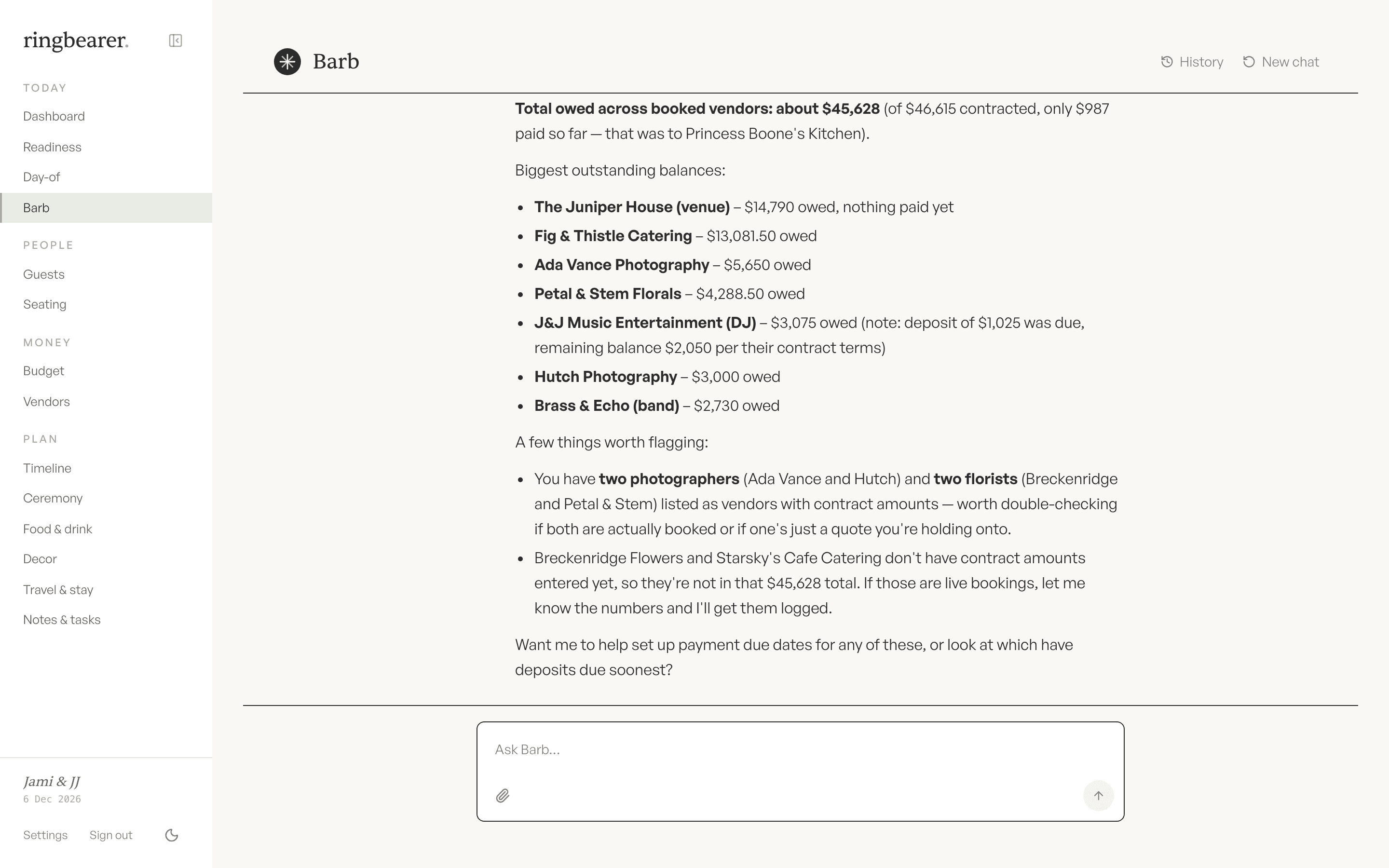
Barb is wired into the wedding's live data: the guest list, the budget, the timeline. She doesn't just answer questions. She does the work, and you approve it.
A third of couples now use AI to help plan the wedding. Mostly that means pasting questions into a chatbot that has never met your guest list, doesn't know the venue's corkage policy, and cheerfully suggests a timeline that has dinner before the ceremony.
Barb is different in one structural way: she lives inside the wedding. When she suggests getting invitations out because RSVPs need six weeks to come back before the caterer's final-count deadline, that's not a generic tip. She read your date, your milestone list, and your headcount first. A full-service coordinator costs $2,000 to $10,000. Barb starts at $20 a month, and she never sleeps on it.
Advice is cheap. Barb does data entry.
She edits, not just advises
Most AI planning tools hand you a paragraph and wish you luck. Barb has hands: she can add the twelve guests from your voicemail summary, log the florist deposit, and add the second reading to the ceremony. You approve, she types.
Grounded in the actual wedding
Ask what to prioritize at 99 days out and Barb answers from your data: your unchecked milestones, your RSVP rate, your open budget lines. Not generic advice. Your wedding's advice.
Reads the paperwork
On Max, upload the venue contract or the catering menu PDF and ask questions in plain English. The mountain of vendor attachments becomes something you can interrogate.
Onboarding by conversation
New couples set the wedding up by talking to Barb (date, venue, headcount, budget) instead of filling out a form that feels like a DMV visit.
Answers from your inbox
Coming soon: connect Gmail and Barb will check what the florist actually said, then leave a reply waiting in your Drafts folder. She won't be able to press Send; that button stays yours.
Works in your Google Drive
Connect Google and Barb writes your planning docs into Drive, then reads and adds to them as plans change. Append-only: she never overwrites a word you wrote.
Barb comes with Pro at $20 a month, for the months you plan and not a day longer.
Begin.
Start free, invite Barb when you're ready. She's expecting you.