Know what's left.
Planned and paid, per category, per vendor, per payment. The spreadsheet that drifted is replaced by a ledger that doesn't.
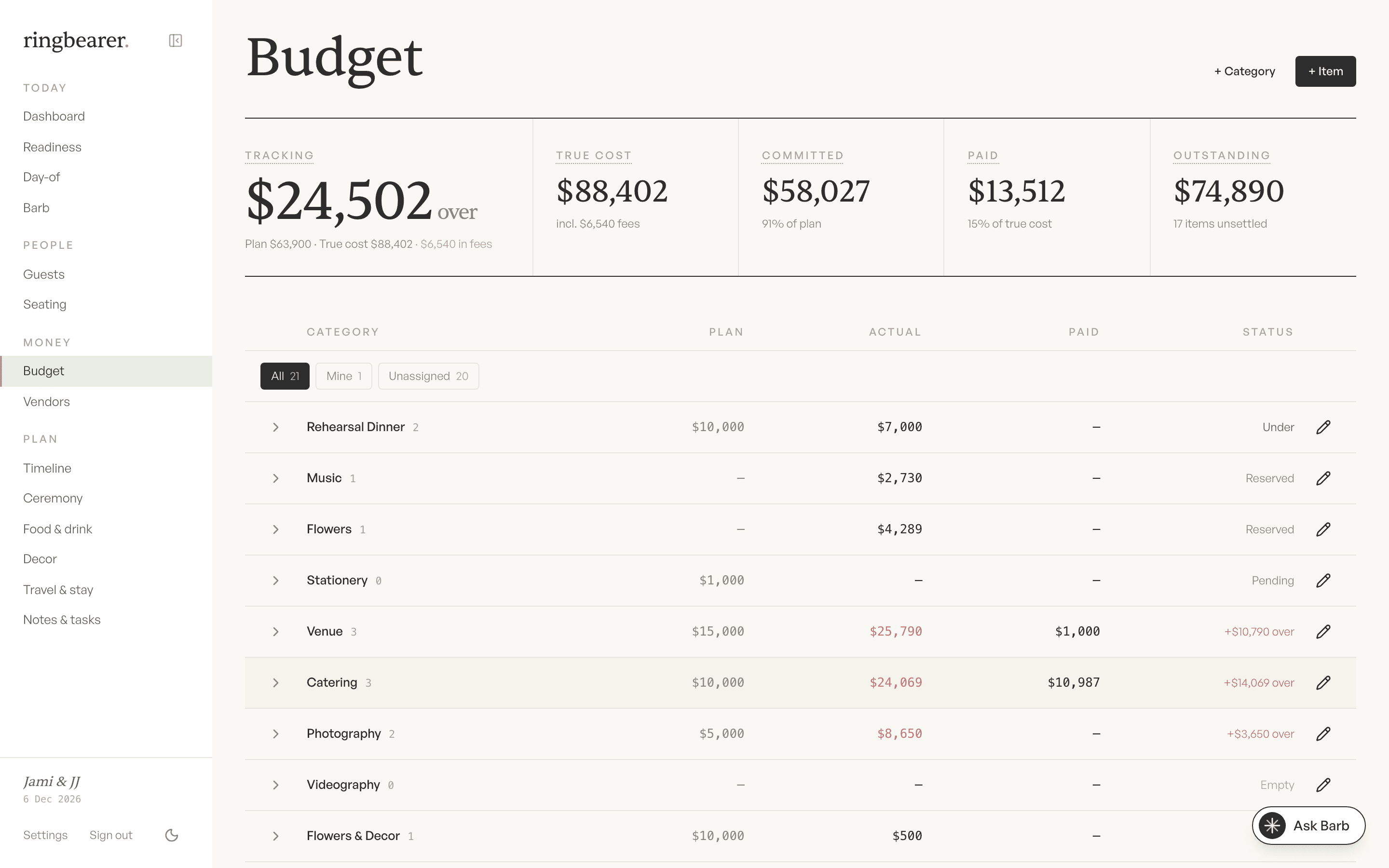
Wedding budgets don't blow up in one bad decision. They drift: a few hundred here on linens, a service fee there, a deposit that someone logged in their head and nowhere else. The spreadsheet was accurate in March. It is now July.
The fix is boring and it works: every line carries its base price, its fees, and its payment schedule, and the totals update themselves. The top of the page says what's paid, out of what you planned, and what's left. When the florist quotes 15% over, you can see in one glance whether the buffer absorbs it, before you say yes.
A ledger, not a guess.
Fee-true totals
The $3,000 quote is really $3,000 plus tax, a service charge, and gratuity. Every line carries its base price and its fees separately, so the total you see is the total you'll pay.
A payment schedule per vendor
Deposit now, a milestone in September, the balance two weeks out. Each contract's obligations live under its line with due dates, and the whole wedding rolls up into one payment calendar: what's due, when, to whom.
Paid against plan
Every category shows its plan, what's paid, and what's left or over. When a category runs past its plan, the budget says so before you sign the next contract.
Payment history per line item
Each payment is dated and logged where it belongs, so 'did we pay the second installment?' has an answer. On Max, contracts imported from a PDF arrive with their schedule and fees already broken out.
The average US wedding runs about $34,000. The difference between budgeted and surprised is a second column.
The method behind it: the wedding budget breakdown.
Begin.
Free to start. The budget tracker costs less than the linens.